
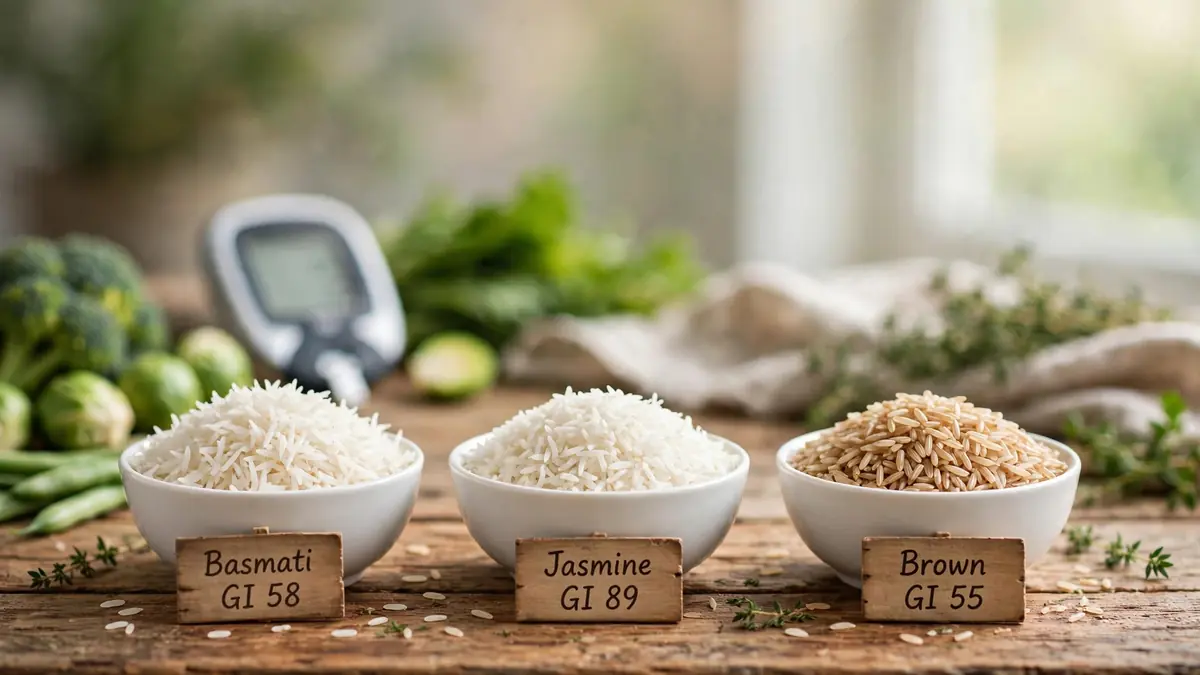
Renee is 54 and had eaten rice with dinner almost every night for decades. After her diabetes diagnosis, she noticed her blood sugar readings climbing higher on nights she served jasmine rice compared to nights she served basmati, even though the portions looked about the same on her plate. She started wondering what the best rice for diabetics basmati vs jasmine vs brown actually was, instead of just guessing her way through the rice aisle.
Rice choices can feel confusing when you’re managing blood sugar. There are so many types, and they don’t all behave the same way once they hit your bloodstream. The good news is you likely don’t have to give up rice completely, you just need to know which options work better for you.
What Is Glycemic Index and Glycemic Load for Rice?
Glycemic index, or GI, is a measure of how fast a food raises your blood sugar compared to pure glucose. Think of it like a speedometer: higher GI foods hit your bloodstream faster, lower GI foods release more slowly.
White rice tends to have a higher GI than brown rice mainly because of processing. White rice has had its fiber-rich bran and germ layers stripped away, leaving mostly starch that digests quickly. Brown rice keeps that outer layer, and fiber acts like a speed bump, slowing down digestion and softening the blood sugar rise.
Common symptoms after a high GI rice meal can include feeling unusually tired or foggy about an hour later, or a blood sugar reading that’s higher than expected on your meter. Fiber matters here because it’s the main reason two similar-looking bowls of rice can affect you so differently.
What Causes Blood Sugar Spike After Eating Rice?
A spike after rice is rarely about just one factor. It’s usually several things stacking together:
- High glycemic index – some rice types digest faster than others
- Large portion size – even a lower GI rice can spike sugar in a big enough bowl
- Eating rice alone – without protein or fiber, sugar hits your bloodstream faster
- Overcooked, soft rice – mushy rice tends to digest and absorb more quickly
- Lack of movement after the meal – staying sedentary means your body isn’t using that glucose for fuel
- Type of rice – jasmine rice generally runs higher on the glycemic index than basmati or brown rice
Symptoms You Should Never Ignore After Eating Rice
Most balanced meals don’t cause noticeable symptoms, but a few are worth paying attention to:
- A sudden, significant blood sugar spike on your meter
- Unusual sleepiness or brain fog shortly after eating
- Increased thirst
- Frequent urination
- Tingling in your hands or feet, especially with long-term poor control
- Symptoms that don’t improve with portion or food adjustments are a sign to check your blood sugar and consider seeing a doctor
Best Rice for Diabetics: Basmati vs Jasmine vs Brown: 9 Tips That Actually Work
These aren’t cures, and they won’t work identically for everyone, but they’re practical starting points that consistently help people manage blood sugar around rice.
1. Focus on overall blood sugar control first
Rice choices matter more when your broader diabetes management, medication, activity, and other meals, is already fairly steady.
2. Practice portion control (the half-cup rule)
Start with about half a cup of cooked rice per meal and adjust from there based on your own blood sugar response.
3. Pair rice with protein and fiber
Adding chicken, fish, beans, or a big side of vegetables slows down how fast the rice’s carbs hit your bloodstream.
4. Choose basmati over jasmine when possible
Basmati generally has a lower glycemic index than jasmine, making it an easier swap that doesn’t require giving up rice altogether.
5. Switch to brown or black rice for everyday meals
Both retain more fiber than white rice varieties, which tends to produce a steadier blood sugar response.
6. Use smart cooking methods
Cooking rice al dente instead of very soft, and rinsing it before cooking, can modestly reduce its glycemic impact.
7. Walk after meals
Even a 10-minute walk after eating rice helps your body use the glucose instead of letting it sit in your bloodstream.
8. Track your blood sugar
Testing before and after different rice meals is the most reliable way to find your own best rice for diabetics, since everyone’s response varies somewhat.
9. Pay attention to meal timing
Eating rice earlier in the day, when you’re generally more active and insulin-sensitive, tends to work better for many people than a large portion late at night.
Best Rice for Diabetics: Basmati vs Jasmine vs Brown Naturally
So what’s the best rice for diabetics basmati vs jasmine vs brown, without any exaggerated claims? Basmati and brown rice generally perform better than jasmine rice for most people, largely due to their lower glycemic index and, in brown rice’s case, higher fiber content. Results vary depending on your overall health and how well-managed your diabetes is, so use this as a starting point rather than a guarantee.
| Rice Type | GI Value | Fiber (per cup, cooked) | Carbs per Cup | Best for Diabetics |
|---|---|---|---|---|
| Jasmine White Rice | 89 | 0.6g | 45g | No, use sparingly |
| Basmati White Rice | 58 | 0.7g | 44g | Yes, in moderation |
| Brown Basmati Rice | 52 | 3.5g | 45g | Yes |
| Long-Grain Brown Rice | 55 | 3.5g | 45g | Yes |
| Black Rice | 42 | 2g | 34g | Yes |
Looking at basmati vs jasmine rice glycemic index side by side, the gap is bigger than most people expect, even though both are popular long-grain white rice options. If you want the fuller white vs brown rice GI chart breakdown, including sticky and short-grain varieties, we’ve covered that in detail in our guide on can diabetics eat rice, white vs brown rice GI chart.
According to the American Diabetes Association, choosing higher fiber carbohydrate sources is one of the more consistent ways to support steadier blood sugar.
Week-by-Week Routine for Beginners
Week 1: Track your blood sugar before and after your usual rice meals to establish a baseline. Stick to a half-cup portion.
Week 2: Add a short walk after meals and start experimenting with basmati or brown rice in place of jasmine or white rice.
Week 3: Build out more balanced meals around your rice, pairing it consistently with protein and vegetables, and pay attention to your sleep, since poor sleep can affect blood sugar too.
Week 4: Review your blood sugar trends. If spikes are still happening regularly, it’s a good time to schedule a visit with your healthcare provider or a registered dietitian.
Real-Life Experiences and Practical Observations
A common beginner mistake is eating a large plate of white rice, usually jasmine, without much else on the plate, especially at dinner. That combination tends to produce the sharpest spikes.
Small, steady improvements usually show up once people start pairing rice with protein and swapping in basmati or brown rice more regularly. What surprises a lot of people is just how much of a difference basmati makes compared to jasmine, even though both look and cook similarly. Consistency, tracking your numbers and sticking with the swaps that work, tends to matter more than finding one “perfect” rice.
Common Mistakes to Avoid
- Eating a large portion of white rice
- Eating rice alone at night without protein or fiber
- Drinking sugary drinks alongside a rice-based meal
- Skipping protein and fiber at the same meal
- Eating fried rice cooked in a lot of oil
- Not checking blood sugar after trying a new rice dish
- Assuming all rice types affect blood sugar the same way
Additional Lifestyle Tips
- Maintain a healthy weight through gradual, sustainable changes
- Stay well hydrated throughout the day
- Get regular exercise, including short walks after meals
- Practice consistent portion control across all meals, not just rice
- Check your feet regularly for cuts, numbness, or slow-healing sores, since blood sugar affects circulation
- Manage stress, since it can affect blood sugar too
- Keep up with regular diabetes checkups
- Prioritize good sleep hygiene
If foot numbness, tingling, or slow-healing sores are a concern alongside your diet changes, our guide on diabetic nerve pain in feet home remedies covers that in more depth.
Frequently Asked Questions (FAQ)
Can diabetics eat white rice?
Yes, in moderation. Basmati is a better choice than jasmine or sticky white rice, and keeping portions to about half a cup helps.
Is brown rice better than white rice for diabetics?
Generally, yes. Brown rice has more fiber, which slows digestion and tends to produce a steadier blood sugar response.
Which rice has the lowest GI for diabetics?
Black rice tends to have one of the lowest glycemic index values among common rice types, followed closely by brown basmati.
How much rice can a diabetic eat per day?
This varies by person, but a common general guideline is around half a cup to one cup of cooked rice per meal, adjusted to your overall carb budget.
Is basmati rice good for diabetics?
Yes. Basmati, in both white and brown forms, generally has a lower glycemic index than jasmine or short-grain white rice.
Can diabetics eat rice at night?
You can, but pairing it with protein and vegetables, and keeping the portion modest, works better than a large bowl of rice alone before bed.
Does washing rice lower GI?
Rinsing rice removes some surface starch, which may modestly reduce its glycemic impact, though the rice variety and cooking method still matter more.
When should I see a doctor?
If you notice persistent high blood sugar, numbness, slow-healing sores, or symptoms that don’t improve with diet changes, it’s time to talk to your healthcare provider.
Final Thoughts
Comparing the best rice for diabetics basmati vs jasmine vs brown comes down to a fairly simple pattern: basmati and brown rice generally edge out jasmine for blood sugar management, especially when paired with protein and eaten in reasonable portions. These swaps and habits support your diabetes care, but they aren’t a substitute for medical treatment. Track your own blood sugar response, build the habits that work for you, and check in with your healthcare provider if anything feels off.
Medical Disclaimer: This article is for informational purposes only and is not intended as medical advice. It is not a substitute for professional medical advice, diagnosis, or treatment. Readers experiencing persistent high blood sugar, numbness, ulcers, infections, poor circulation, or worsening symptoms should consult a qualified healthcare provider before making diet changes.