
Walter is 58 and has eaten rice with dinner most nights of his life. When his doctor diagnosed him with type 2 diabetes, the advice he got was simple and a little discouraging: cut back on rice. Nobody told him how much, just less. He spent weeks either skipping rice entirely or eating tiny, unsatisfying spoonfuls, unsure if he was doing it right.
That’s the real question behind so much of this confusion: how much rice can a diabetic eat per meal, exactly? Most people don’t want to give up rice completely, they just want a number they can actually work with.
What Happens When You Eat Rice With Diabetes?
Rice is mostly carbohydrate, and your body breaks carbohydrates down into glucose, which is just sugar your cells use for energy. In someone without diabetes, insulin moves that glucose out of the bloodstream fairly efficiently. With diabetes, that process doesn’t work as smoothly, so glucose can build up in your blood after a rice-heavy meal.
White rice and brown rice behave differently here. White rice has had its fiber-rich outer layers removed, so it digests fast and releases glucose quickly. Brown rice keeps that fiber layer, which slows things down.
This connects to glycemic index, or GI, which is basically a speed rating for how fast a food raises blood sugar. Think of it like the difference between pouring water through a wide funnel versus a narrow one. White rice is the wide funnel; fiber-rich brown rice is the narrower one.
Portion matters more than most people realize. A small serving of white rice can affect you less than a huge plate of brown rice. Type of rice sets the starting point, but portion size is often the bigger lever.
What Causes Blood Sugar Spikes From Rice?
A spike after eating rice usually comes from more than one factor stacking together:
- Large portion size – the single biggest driver for most people
- Type of rice – white, jasmine, and sticky rice tend to spike sugar faster than brown or parboiled rice
- Eating rice alone – without fiber or protein, the carbs hit your bloodstream faster
- Long-term high blood sugar – makes your body less efficient at handling any carb load, including rice
- Lack of physical activity – sitting still after a meal means your body isn’t using that glucose for fuel
- Other factors – obesity, smoking, and low vitamin D levels can all make blood sugar management a bit harder in general
Signs Your Rice Portion Is Too Big
A few signals tend to show up when a rice portion has crossed into “too much” territory for your body:
- Higher-than-expected blood sugar 1 to 2 hours after eating
- Feeling unusually sleepy or thirsty after the meal
- Getting hungry again soon after a large rice meal, despite eating plenty
- Higher fasting blood sugar the next morning
If you notice these patterns repeatedly, or your blood sugar stays elevated for hours rather than settling back down, it’s worth checking in with your doctor rather than adjusting portions on your own indefinitely.
How Much Rice Can a Diabetic Eat Per Meal: 9 Portion Tips That Actually Work
These tips won’t cure diabetes and they won’t work identically for everyone, but they’re practical starting points that consistently help people manage rice portions.
1. The 1/2 Cup Cooked Rule
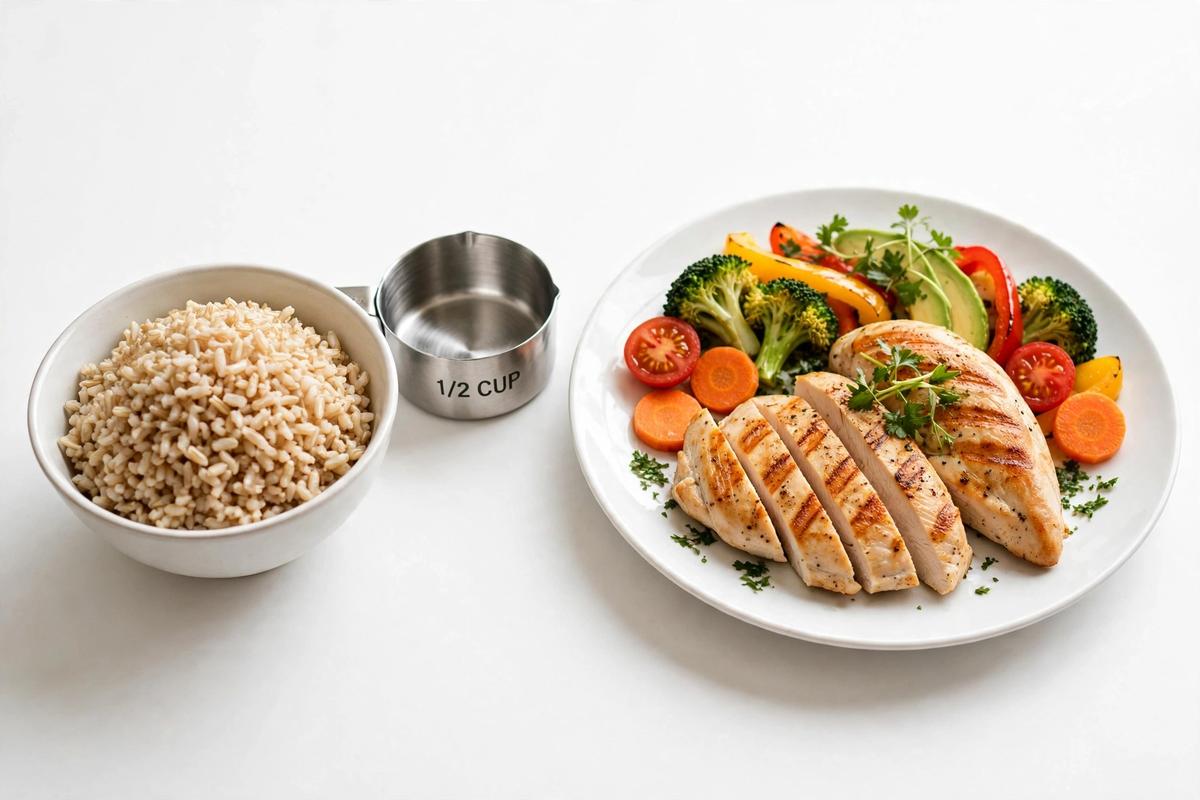
For most adults with diabetes, starting with about half a cup of cooked rice per meal is a reasonable baseline. That’s roughly the size of a small fist, which makes it easy to eyeball once you’ve measured it a few times.
2. Choose better rice types
Basmati, brown, and black rice generally have a lower glycemic index than jasmine or sticky rice, so the same portion tends to be gentler on your blood sugar.
3. Use the plate method
Fill half your plate with non-starchy vegetables, a quarter with protein, and the remaining quarter with rice. This naturally keeps your rice portion in check without needing to measure every time.
4. Always pair rice with fiber and protein
Beans, chicken, fish, or a big side of vegetables slow down digestion, which softens the blood sugar curve compared to eating rice on its own.
5. Try cooled rice for resistant starch
Cooking rice and letting it cool, even just refrigerating it for a few hours before reheating, increases its resistant starch content, which may modestly reduce its impact on blood sugar.
6. Walk 10 minutes after eating
A short walk helps your muscles use the glucose from your meal, which can noticeably soften a post-meal spike.
7. Measure, don’t eyeball
Especially early on, use a measuring cup instead of guessing. Most people underestimate or overestimate their usual “normal” portion by quite a bit.
8. Eat an anti-inflammatory diet overall
A diet built around vegetables, healthy fats, and lean protein supports better blood sugar control generally, which makes any individual food, including rice, easier to manage.
9. Prioritize better sleep
Poor sleep affects insulin sensitivity, so the same rice portion can hit differently after a rough night’s sleep versus a well-rested one.
How Much Rice Can a Diabetic Eat Per Meal Naturally Without Spikes?
So, how much rice can a diabetic eat per meal without spiking blood sugar? For most people, a half-cup to one-cup portion of a lower GI rice, paired with protein and fiber, is a reasonable target. Results vary depending on your overall health, activity level, and how well-managed your diabetes is, so treat this as a starting point rather than a fixed rule.
For a deeper look at how different rice types compare, our guide on can diabetics eat rice, white vs brown rice GI chart breaks down GI and GL values across common varieties. We’ve also compared specific types head-to-head in best rice for diabetics: basmati vs jasmine vs brown.
According to the American Diabetes Association, portion awareness and food pairing are two of the more reliable tools for keeping carbohydrate-heavy meals from spiking blood sugar.
Week-by-Week Routine for Beginners
Week 1: Track your blood sugar before and after rice meals, and start measuring your portions instead of eyeballing them.
Week 2: Experiment with switching rice types, and build meals around the plate method instead of piling rice on first.
Week 3: Add a consistent pairing habit, protein and fiber with every rice meal, along with a short walk afterward and a better bedtime routine.
Week 4: Review your blood sugar log. If your numbers are still running high despite these changes, schedule a visit with your healthcare provider or a registered dietitian.
Real-Life Experiences and Practical Observations
A common beginner mistake is eyeballing rice portions instead of measuring, which often means eating far more than intended, especially at dinner. Eating a large portion alone, without protein, is another frequent pattern that leads to bigger spikes.
Most people see small, steady improvements once they start measuring and pairing rice with other foods, rather than one dramatic change. What surprises a lot of people is how much the cooled-rice trick and a short walk after eating can shift their numbers, even without changing the rice itself. Consistency, tracking numbers and sticking with the habits that work, tends to matter more than finding one perfect rice type.
Common Mistakes to Avoid
- Eyeballing portions instead of measuring
- Eating rice alone without protein or fiber
- Eating large portions at night
- Assuming brown rice means unlimited quantity
- Skipping meals earlier in the day to “save carbs” for rice later
- Walking barefoot after meals if you have any numbness in your feet
- Waiting too long to see a doctor about persistent high blood sugar
Additional Lifestyle Tips
- Maintain a healthy weight through gradual, sustainable changes
- Stay well hydrated throughout the day
- Get regular exercise, including short walks after meals
- Wear proper, supportive footwear for walks, especially if you have any foot sensitivity
- Manage stress, since it can affect blood sugar too
- Keep up with regular diabetes checkups
- Prioritize good sleep hygiene
If foot numbness or sensitivity is part of your situation, our guide on diabetic nerve pain in feet home remedies covers safe walking habits in more depth.
Frequently Asked Questions (FAQ)
How much rice can a diabetic eat per meal?
Most people do reasonably well starting with about half a cup of cooked rice, paired with protein and fiber, then adjusting based on their own blood sugar response.
Is brown rice better than white rice for diabetics?
Generally, yes. Brown rice has more fiber, which slows digestion and tends to produce a steadier blood sugar response than white rice.
Can diabetics eat rice every day?
Many people can, in moderate portions and paired well, but it depends on your overall diet and how your blood sugar responds. Checking in with your doctor or dietitian helps confirm what’s right for you.
Does cooling rice lower blood sugar spike?
Cooling cooked rice increases its resistant starch content, which may modestly reduce its glycemic impact compared to eating it hot and freshly cooked.
What is the best time to eat rice for diabetics?
Earlier in the day, when most people are more active and somewhat more insulin-sensitive, tends to work better than a large portion late at night.
How do I pair rice to avoid sugar spikes?
Add a protein source, like chicken, fish, or beans, and a good portion of non-starchy vegetables to slow down digestion and soften the blood sugar rise.
Is basmati rice good for diabetics?
Yes. Basmati generally has a lower glycemic index than jasmine or sticky rice, making it an easier choice for the same portion size.
When should I see a doctor about high blood sugar after rice?
If your blood sugar stays elevated for hours, you notice numbness or slow-healing sores, or portion adjustments aren’t helping, it’s time to check in with your healthcare provider.
Final Thoughts
So, how much rice can a diabetic eat per meal? For most people, a half-cup to one-cup portion of a lower GI rice, measured rather than eyeballed and paired with protein and fiber, is a solid starting point. Portion control supports your diabetes care, but it doesn’t replace medical treatment. Track your own blood sugar response, adjust as you learn, and loop in your healthcare provider if anything isn’t improving.
Medical Disclaimer: This article is for informational purposes only and is not intended as medical advice. It is not a substitute for professional medical advice, diagnosis, or treatment. Readers experiencing persistent high blood sugar, numbness, ulcers, infections, poor circulation, or worsening symptoms should consult a qualified healthcare provider before trying new diet tips.
1 thought on “How Much Rice Can a Diabetic Eat Per Meal”