
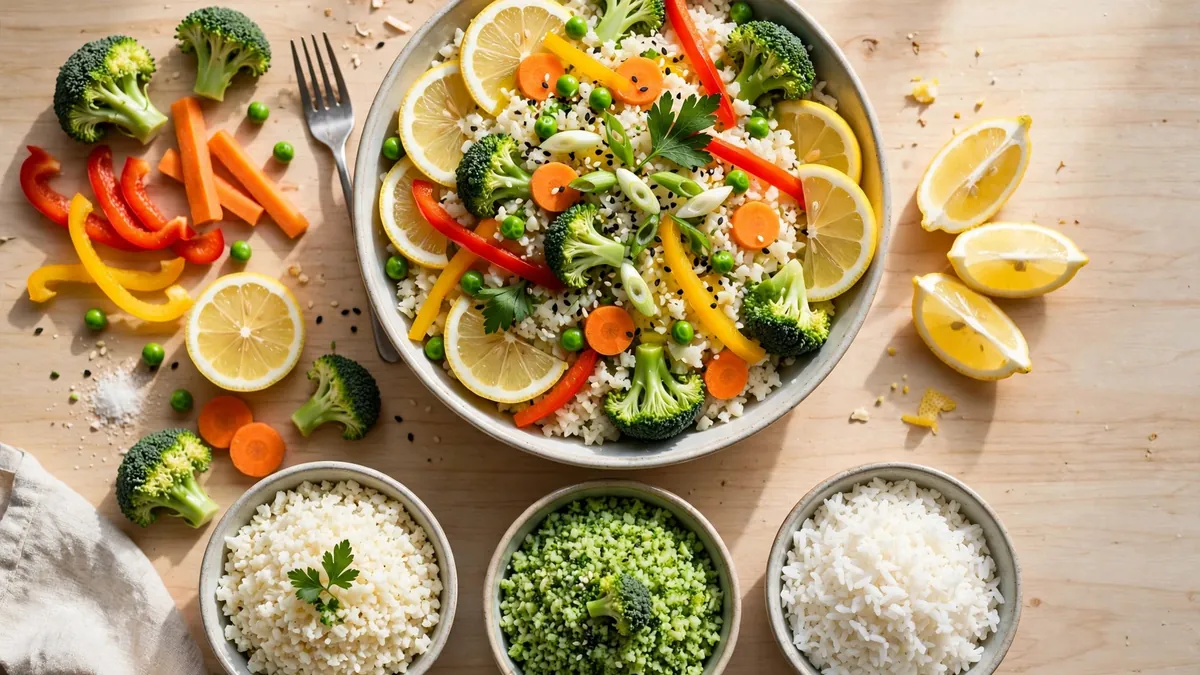
Diabetic rice recipes: low carb options that actually taste good were exactly what Priya went looking for after her doctor suggested cutting back on rice. She’d grown up eating rice at nearly every dinner, and the idea of giving it up completely felt more like a punishment than a solution.
Rice is comfort food for a lot of people, and giving it up entirely is genuinely hard. The good news is that you don’t have to choose between managing blood sugar and enjoying a satisfying rice-style dish. A handful of smart swaps and cooking methods can get you most of the way there, without the blood sugar rollercoaster.
Why Regular White Rice Is a Problem for Diabetes?
White rice raises blood sugar quickly because it has a high glycemic index, meaning it converts to glucose in your bloodstream fast. A single cup of cooked white rice carries around 45 grams of carbohydrate, with very little fiber to slow that process down.
Think of it like pouring water through a wide-open funnel versus a narrow one. White rice is the wide funnel, everything rushes through at once. Fiber-rich foods act like a narrower funnel, releasing sugar more gradually.
Portion control matters just as much as rice type. A small serving of white rice can be more manageable than a large serving of a “healthier” grain, so the amount on your plate is often just as important as what’s on it.
What Makes a Rice Recipe Diabetic-Friendly?
A few factors separate a diabetic-friendly rice dish from one that spikes blood sugar:
- Low glycemic index – ingredients that release sugar slowly
- High fiber – fiber slows digestion and softens blood sugar spikes
- Portion size – even a good ingredient can cause problems in a big enough serving
- Pairing with protein and healthy fats – both slow down how quickly carbs are absorbed
- Cooking method – techniques like cooling cooked rice or parboiling can modestly change how it affects blood sugar
Best Low-Carb Rice Alternatives for Diabetics
- Cauliflower rice – finely chopped cauliflower that mimics rice’s texture with a fraction of the carbs
- Broccoli rice – similar concept to cauliflower rice, with a slightly different flavor and more fiber
- Konjac (shirataki) rice – made from konjac root, extremely low in carbs and calories
- Quinoa – higher in protein and fiber than rice, though still eaten in controlled portions
- Brown rice – more fiber than white rice, with a meaningfully lower glycemic index
- Black rice and wild rice – both retain more fiber and nutrients than standard white rice
Diabetic Rice Recipes: Low Carb Options That Actually Taste Good
These nine recipes are built around the swaps above, so you get a satisfying, rice-style dish without the same blood sugar impact as a big bowl of white rice.
Recipe 1: Cauliflower Fried Rice (Diabetic-Friendly)
Prep time: 10 minutes | Cook time: 10 minutes | Servings: 4
Ingredients: 1 medium head cauliflower, riced (or 4 cups pre-riced cauliflower), 2 eggs, 1 cup mixed vegetables (peas, carrots, onion), 2 cloves garlic, minced, 2 tbsp low-sodium soy sauce, 1 tbsp sesame oil
Instructions: Heat sesame oil in a large skillet over medium-high heat. Scramble the eggs, then set aside. Sauté garlic and vegetables for 3-4 minutes. Add cauliflower rice and cook for 5-6 minutes, stirring often. Stir in the eggs and soy sauce, and cook for another 2 minutes.
Carbs per serving: approximately 8g | Tip: Don’t overcrowd the pan, or the cauliflower will steam instead of getting slightly crisp.
Recipe 2: Garlic Butter Shirataki Rice
Prep time: 5 minutes | Cook time: 8 minutes | Servings: 2
Ingredients: 1 package shirataki rice, rinsed well, 1 tbsp butter, 2 cloves garlic, minced, salt and pepper to taste, fresh parsley
Instructions: Rinse shirataki rice thoroughly under cold water, then dry-fry it in a pan for 2-3 minutes to remove excess moisture. Add butter and garlic, sauté for 2 minutes. Season and top with parsley.
Carbs per serving: approximately 1g | Tip: Don’t skip the dry-fry step, it removes the naturally slippery texture shirataki rice has straight out of the package.
Recipe 3: Brown Rice and Veggie Bowl (Portion-Controlled)
Prep time: 5 minutes | Cook time: 25 minutes | Servings: 4
Ingredients: 1 cup brown rice, uncooked, 2 cups mixed roasted vegetables (zucchini, bell pepper, onion), 1 tbsp olive oil, lemon juice, salt and pepper
Instructions: Cook brown rice according to package instructions. Roast vegetables tossed in olive oil at 400°F for 20 minutes. Combine using a half-cup of rice per bowl, topped generously with vegetables.
Carbs per serving: approximately 23g | Tip: Measuring the rice portion, rather than eyeballing it, is what keeps this dish diabetic-friendly.
Recipe 4: Cauliflower Rice Biryani Style
Prep time: 15 minutes | Cook time: 15 minutes | Servings: 4
Ingredients: 4 cups cauliflower rice, 1 onion, sliced, 1 tomato, diced, 1 tsp garam masala, ½ tsp turmeric, 2 tbsp oil, fresh cilantro, mint leaves
Instructions: Sauté onions until golden. Add tomato and spices, cook for 3-4 minutes. Add cauliflower rice, stir well, and cook covered for 8-10 minutes. Garnish with cilantro and mint.
Carbs per serving: approximately 9g | Tip: Let the cauliflower rice cook covered so it steams gently instead of turning mushy.
Recipe 5: Broccoli Rice with Chicken
Prep time: 10 minutes | Cook time: 15 minutes | Servings: 4
Ingredients: 4 cups riced broccoli, 2 boneless chicken breasts, diced, 2 tbsp olive oil, 2 cloves garlic, minced, salt, pepper, red pepper flakes
Instructions: Cook chicken in olive oil until browned and cooked through, about 8 minutes. Remove and set aside. Sauté garlic and broccoli rice in the same pan for 5-6 minutes. Return chicken to the pan and combine.
Carbs per serving: approximately 7g | Tip: Broccoli rice releases more water than cauliflower, so cook it a minute or two longer to avoid a watery dish.
Recipe 6: Quinoa and Cauliflower Mixed Rice
Prep time: 5 minutes | Cook time: 20 minutes | Servings: 4
Ingredients: ½ cup quinoa, uncooked, 2 cups cauliflower rice, 1 cup vegetable broth, 1 tbsp olive oil, salt and pepper
Instructions: Cook quinoa in vegetable broth according to package instructions. Separately sauté cauliflower rice in olive oil for 5 minutes. Combine both once quinoa is done, and season to taste.
Carbs per serving: approximately 16g | Tip: Mixing quinoa with cauliflower rice cuts the overall carb count nearly in half compared to quinoa alone.
Recipe 7: Low-Carb Cabbage Rice Pulao
Prep time: 10 minutes | Cook time: 15 minutes | Servings: 4
Ingredients: ½ head cabbage, finely shredded, 1 carrot, grated, 1 onion, sliced, 1 tsp cumin seeds, 2 tbsp oil, salt to taste
Instructions: Heat oil and toast cumin seeds until fragrant. Add onion and cook until soft. Add cabbage and carrot, cook covered for 10 minutes, stirring occasionally.
Carbs per serving: approximately 8g | Tip: Shred the cabbage finely so the texture is closer to rice grains.
Recipe 8: Konjac Rice Stir-Fry
Prep time: 5 minutes | Cook time: 10 minutes | Servings: 2
Ingredients: 1 package konjac rice, rinsed, 1 cup mixed stir-fry vegetables, 1 tbsp low-sodium soy sauce, 1 tsp sesame oil, 1 clove garlic, minced
Instructions: Rinse and dry-fry konjac rice for 2-3 minutes. Add garlic and vegetables, stir-fry for 4-5 minutes. Add soy sauce and sesame oil, toss to combine.
Carbs per serving: approximately 2g | Tip: Konjac rice has almost no natural flavor, so it depends entirely on the sauce and vegetables for taste.
Recipe 9: Wild Rice with Mushrooms (Low-Carb Portion)
Prep time: 10 minutes | Cook time: 40 minutes | Servings: 4
Ingredients: ½ cup wild rice, uncooked, 2 cups mushrooms, sliced, 1 onion, diced, 2 tbsp butter, fresh thyme, salt and pepper
Instructions: Cook wild rice according to package instructions, this takes longer than white rice. Sauté mushrooms and onion in butter until golden. Combine with cooked wild rice and fresh thyme.
Carbs per serving: approximately 18g | Tip: Wild rice has more fiber and a lower glycemic index than white rice, but portion size still matters here.
Diabetic Rice Recipes: Low Carb Options for Everyday Meals
These diabetic rice recipes: low carb options work well rotated throughout the week rather than repeating the same one daily, since variety makes it easier to stick with long term. Results vary depending on your overall diet and how well-managed your diabetes is, so it’s worth testing your own blood sugar response to each dish.
Meal Prep and Storage Tips for Beginners
Batch cooking cauliflower rice ahead of time saves a lot of weeknight effort. Rice it in a food processor, then sauté in batches and store in the fridge for up to four days, or freeze in portions for up to two months.
Shirataki rice stores well in its original liquid in the fridge, unopened, for a long shelf life, but once opened and rinsed, use it within a couple of days.
To reheat rice-style dishes without turning them mushy, reheat in a dry skillet over medium heat rather than the microwave, which tends to trap steam and soften the texture too much.
A simple weekly plan might look like cauliflower fried rice on Monday, a brown rice veggie bowl midweek, and a shirataki stir-fry toward the end of the week, keeping things varied without much extra planning.
Real-Life Experiences and Practical Observations
A common beginner mistake is assuming brown rice is essentially carb-free just because it’s a “healthier” grain. It still needs the same portion control as white rice, just with a gentler blood sugar curve.
Cauliflower rice tends to come closest to real rice in texture, especially in fried rice-style dishes where sauce and seasoning do a lot of the work. Shirataki rice divides opinion, some people love the low-carb payoff, others find the texture takes real getting used to.
Family members often can’t tell the difference in a well-seasoned biryani-style cauliflower rice dish, which makes it an easier sell at the dinner table than expected.
Common Mistakes to Avoid
- Eating large portions of brown rice thinking it’s essentially carb-free
- Not rinsing shirataki rice thoroughly before cooking
- Skipping protein and healthy fat, which help slow blood sugar absorption
- Using sugary sauces that undo the benefit of a lower-carb base
- Overeating “healthy” alternatives simply because they feel like a free pass
Additional Lifestyle Tips
- Track your blood sugar response after trying new rice recipes to learn your own patterns
- Take a short walk after meals when possible
- Stay well hydrated throughout the day
- Use the plate method, filling half your plate with vegetables, to naturally control portions
For a deeper look at rice portion guidelines generally, our article on how much rice can a diabetic eat per meal covers that in more detail.
According to the American Diabetes Association, building meals around vegetables and lean protein, with smaller portions of higher-carb foods like rice, is one of the more reliable approaches to blood sugar management.
Frequently Asked Questions (FAQ)
Can diabetics eat rice at all?
Yes, in moderation. Choosing lower glycemic options and controlling portion size makes rice easier to fit into a diabetes-friendly diet.
Which rice is lowest in carbs?
Cauliflower rice and shirataki (konjac) rice are the lowest by far, since neither is technically rice at all.
Is cauliflower rice good for diabetics?
Yes. It’s very low in carbs and has minimal impact on blood sugar compared to traditional rice.
Is brown rice better than white rice for diabetes?
Generally, yes. Brown rice has more fiber and a lower glycemic index, though portion control still matters.
How much rice can a diabetic eat per day?
This varies by person, but a common guideline is around half a cup to one cup of cooked rice per meal, adjusted to your overall carb budget.
Does cooling rice lower its glycemic index?
Cooling cooked rice increases its resistant starch content, which may modestly reduce its glycemic impact compared to eating it hot.
Is shirataki rice safe for diabetics?
Yes. It’s extremely low in carbs and calories, making it one of the safest options for blood sugar management.
What can I eat instead of rice for diabetes?
Cauliflower rice, broccoli rice, shirataki rice, and quinoa are all reasonable substitutes, each with a different texture and flavor profile.
Final Thoughts
Diabetic rice recipes: low carb options that actually taste good prove that managing blood sugar doesn’t mean giving up the comfort of a rice-style meal. Whether it’s cauliflower fried rice, a portion-controlled brown rice bowl, or a shirataki stir-fry, there’s likely a version that fits your taste and your blood sugar goals. Experiment with a few, track how your body responds, and keep the ones that work for you.
Medical Disclaimer: This article is for informational purposes only and is not intended as medical advice. It is not a substitute for professional medical advice, diagnosis, or treatment. Readers experiencing persistent high blood sugar or other health concerns should consult a qualified healthcare provider before making significant diet changes.