
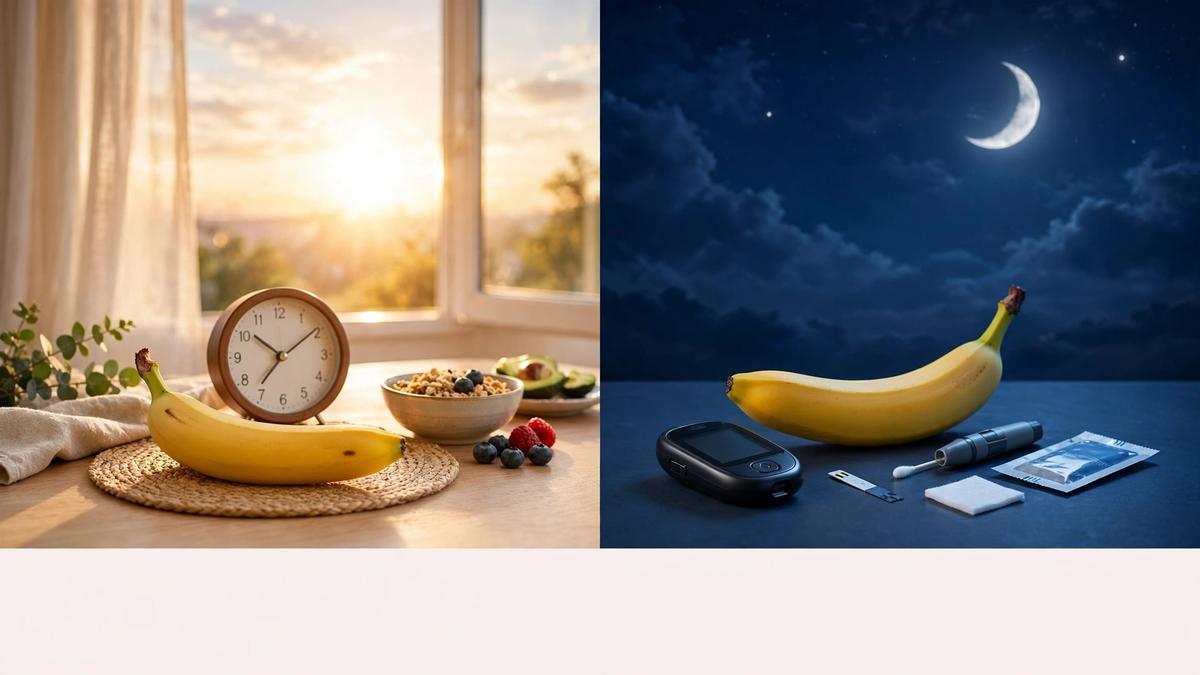
My neighbor Renee found out she was prediabetic last spring, and the first thing she gave up was bananas. She loved them in her morning oatmeal, but her sister told her fruit “spikes sugar” and she panicked. A few weeks later she asked me the question I hear all the time: is banana good for diabetics in the morning or night? It’s a fair question, and the honest answer is that timing really can change how your body handles this fruit.
Blood sugar doesn’t respond the same way at 7 a.m. as it does at 9 p.m. Once you understand why morning banana for diabetics works differently than night banana for diabetics, this fruit stops feeling like something to fear.
Are Bananas Good for Diabetics?
Bananas get a bad reputation in diabetes circles, but they’re not the enemy people think they are. A medium banana has around 105 calories, roughly 27 grams of carbohydrate, 3 grams of fiber, and a solid dose of potassium and vitamin B6.
Potassium supports healthy blood pressure, which matters a lot for people with diabetes. So when someone asks me is banana good for diabetics in the morning or night, I always start by explaining that the fruit itself isn’t the problem — timing and portion are what change the outcome for diabetics eating banana.
The part that actually matters for blood sugar is the glycemic index, or GI. A ripe banana sits in the medium GI range, around 51, while a green, less-ripe banana drops closer to 30, considered low. That’s because unripe bananas contain more resistant starch, which digests slowly, almost like fiber.
As a banana ripens, that starch converts to natural sugar, and the GI climbs. Glycemic load, which factors in portion size along with GI, tells an even more useful story for anyone comparing banana for diabetics in the morning versus at night. A whole large banana has a higher glycemic load than half a small one. This is why portion size deserves just as much attention as ripeness when deciding whether banana is good for diabetics in the morning or at night.
What Happens When Diabetics Eat Banana in the Morning?
Mornings tend to be more forgiving for carbohydrate tolerance. After a night of fasting, your body has used up glycogen stores and muscles are primed to soak up glucose, especially if you’re active early. This is part of why many diabetes educators, myself included, believe banana is good for diabetics in the morning more often than at night.
Here’s what tends to happen with morning banana for diabetics:
- Fasting blood sugar effect: Eaten alongside protein or fat, a banana’s carbs get absorbed more gradually.
- Energy for the day: Natural sugars combined with fiber give a steadier energy release than a sugary pastry.
- Digestion and metabolism: Morning digestion tends to run more efficiently, tied to insulin sensitivity being higher earlier.
- Best pairing: Peanut butter, walnuts, or plain Greek yogurt slow sugar absorption noticeably.
People who exercise in the morning tend to benefit most from banana at breakfast — the carbs get put to use instead of sitting around as extra glucose.
What Happens When Diabetics Eat Banana at Night?
Nighttime is a different story, and this is where people get into trouble. Insulin sensitivity naturally dips in the evening, meaning night banana for diabetics can behave very differently than the same fruit eaten at breakfast. This is exactly why the question, is banana good for diabetics in the morning or night, comes up so often.
A few things tend to happen when diabetics eat banana at night:
- Blood sugar spike risk: Sugar from a ripe banana can linger higher in the bloodstream overnight.
- Sleep and digestion: A large or overripe banana right before bed can cause bloating or reflux.
- Weight gain concerns: Calories consumed close to bedtime are more likely to be stored.
- When it might be okay: A small portion of a slightly green banana, paired with protein, a couple of hours before bed, is a safer version of night banana for diabetics.
- Who should avoid it: Anyone with elevated fasting blood sugar readings is better off skipping banana at night altogether.
Morning vs Night: Which Time Is Better for Diabetics to Eat Banana?
Whenever people ask me is banana good for diabetics in the morning or night, this comparison table is usually where I point them first.
| Factor | Morning | Night |
|---|---|---|
| Insulin sensitivity | Higher, better carb tolerance | Lower, higher spike risk |
| Energy use | Carbs get used for daily activity | Carbs more likely stored as fat |
| Digestion | Generally smoother | Can cause bloating before sleep |
| Sleep impact | Minimal | May disrupt sleep quality |
| Best pairing | Peanut butter, nuts, Greek yogurt | Small portion only, hours before bed |
| Overall verdict | Generally the safer choice | Use caution, smaller portion |
Based on how insulin sensitivity behaves, morning banana for diabetics generally comes out ahead of night banana for diabetics. That said, individual response varies. The only way to know for sure is to test your own response with a glucose meter.
Is Banana Good for Diabetics in the Morning or Night? What Science Says
Research on fruit timing consistently points toward better carbohydrate tolerance earlier in the day. That doesn’t mean night banana for diabetics is dangerous, and it doesn’t mean morning banana for diabetics is a free pass either.
Pairing banana with protein, watching portion size, and favoring earlier hours tends to produce steadier numbers than eating a large, overripe banana late at night. So when someone asks me point-blank, is banana good for diabetics in the morning or night, my answer is: morning, with a plan, beats night, without one.
How to Eat Banana Safely If You Have Diabetes
Regardless of whether banana is good for diabetics in the morning or night for your specific body, these steps make it safer either way:
- Choose a banana that’s still slightly green rather than fully ripe.
- Stick to half a banana, or one small banana.
- Pair it with peanut butter, almonds, or plain Greek yogurt.
- Avoid eating banana completely alone on an empty stomach.
- Skip banana smoothies or shakes made with added sugar.
- Check your blood sugar before and after eating so you know your own response.
Real-Life Experiences and Practical Observations
When I’ve talked with people managing diabetes, a pattern shows up again and again. The most common beginner mistake is eating the fully ripe, sweet-spotted banana late at night as a dessert substitute — that’s almost always the version that causes the biggest spike, which is exactly why the debate over banana for diabetics in the morning or night matters so much.
People who get good results cut the banana in half and test their blood sugar consistently instead of guessing whether banana is good for diabetics in the morning or night based on assumptions.
One woman I spoke with assumed all fruit was risky until she tracked her numbers for two weeks and realized her real problem food was white rice, not banana. That’s the value of testing instead of guessing about banana and blood sugar.
Common Mistakes to Avoid
- Eating an overripe, heavily spotted banana
- Choosing a large banana instead of a small or half portion
- Making banana a nightly bedtime habit
- Drinking banana juice or blending banana with added sugar
- Skipping blood sugar checks
- Assuming every fruit affects blood sugar the same way banana does
If you’re curious how banana stacks up against other snack forms, it’s worth reading about banana chips and banana bread for diabetics, since processed versions behave very differently from a fresh banana.
Additional Lifestyle Tips for Diabetics
Banana timing is just one piece of the bigger picture:
- Best fruits for diabetes tend to be lower-GI options like berries, apples, and pears, which you can read more about here.
- Fiber and protein slow sugar absorption for almost any carbohydrate.
- Staying hydrated supports kidney function.
- Regular exercise helps muscles absorb glucose more efficiently.
- Consistent blood sugar monitoring is the only way to know how your body handles timing.
Frequently Asked Questions (FAQ)
Is banana good for diabetics in the morning or night?
Morning is generally the better window, since insulin sensitivity tends to be higher earlier in the day, but individual results vary.
Can diabetics eat banana daily?
Yes, in most cases, as long as portion size stays small and it’s paired with protein or fat.
Which banana is best for diabetics?
A slightly green, less ripe banana, since it has a lower glycemic index than a fully ripe one.
How many bananas can a diabetic eat per day?
Most people do fine with half to one small banana per day.
Does banana raise blood sugar quickly?
A ripe banana can raise blood sugar fairly quickly alone, but pairing it with protein slows that response.
Is it okay to eat banana at night for diabetics?
It can be okay in small amounts a few hours before bed, but a large or overripe night banana for diabetics tends to cause a bigger spike.
What is the best time for diabetics to eat fruit?
Earlier in the day generally works better for blood sugar control.
Should diabetics avoid banana completely?
No — it just needs to be portioned, timed, and paired thoughtfully. You can also compare its glycemic index against other fruits here.
Final Thoughts
If you’re still asking yourself is banana good for diabetics in the morning or night, the practical answer is that morning tends to be the safer, more forgiving window, but your own body has the final say. Test your blood sugar before and after eating banana at different times, and adjust portion size based on what you actually see on the meter. The next time someone asks you whether banana is good for diabetics in the morning or night, you’ll have a tested answer instead of a guess.
For more general guidance, resources from the American Diabetes Association, Mayo Clinic, and the Harvard T.H. Chan School of Public Health offer solid, research-backed starting points.
Medical Disclaimer: This article is for informational purposes only and is not intended as medical advice. It is not a substitute for professional medical advice, diagnosis, or treatment. Readers with diabetes or other health conditions should consult a qualified healthcare provider or registered dietitian before making changes to their diet.