
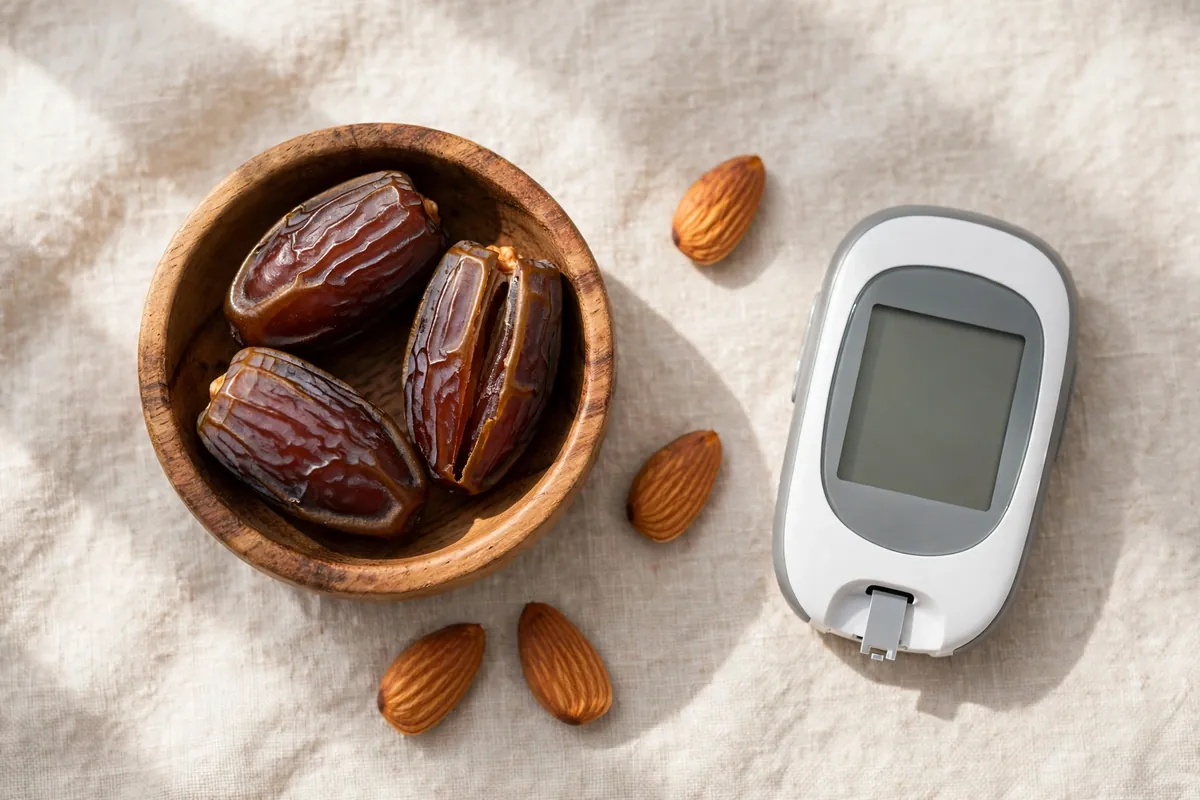
A few years ago, a man in his late 50s came to me after a routine checkup. I’ll call him Rashid. He had type 2 diabetes and loved dates. Every Ramadan, his family broke the fast with them. Now he sat across from me, nervous, and asked, “Do I have to give them up forever?”
I hear this question a lot. So let’s answer it clearly. Can diabetic eat dates? how many dates can a diabetic safely eat per day? Yes, most people with diabetes can eat dates in moderation. For well-controlled diabetes, that usually means 1 to 2 Medjool dates or 2 to 3 smaller dates per day, ideally paired with protein or healthy fat. Portion size is the whole story here.
Below, I’ll walk you through the numbers, the science, and the practical habits that helped Rashid keep his favorite fruit on the table. If you’ve been wondering can diabetic eat dates without messing up your glucose, this guide is for you.
What Are Dates? Nutritional Profile
Dates are the sweet fruit of the date palm tree. People have eaten them for thousands of years, especially across the Middle East and South Asia. Today, you can find them in almost any US grocery store.
They are naturally sweet, chewy, and rich in nutrients. But they also contain concentrated natural sugar, which is why people with diabetes worry about them.
Common Types of Dates
- Medjool: Large, soft, and caramel-like. They are the sweetest and heaviest of the group.
- Ajwa: Small, dark, and soft. They come mainly from Saudi Arabia and are highly valued in Muslim communities.
- Deglet Noor: Medium-sized, firmer, and less sweet. They are widely sold in the US.
- Zahidi: Golden-yellow and firmer, with a milder, nutty taste.
Nutrition in One Date
The numbers change with size and variety. Here is a rough guide based on USDA data:
| Type | Approx. Weight | Carbs | Sugar | Fiber | Calories |
|---|---|---|---|---|---|
| Medjool (1 date) | 24 g | 18 g | 16 g | 1.6 g | 66 |
| Deglet Noor (1 date) | 7–8 g | 5–6 g | 4–5 g | 0.6 g | 20 |
Dates also provide potassium, magnesium, copper, and B vitamins. They contain antioxidants too, including flavonoids and phenolic acids. These compounds help protect cells from everyday oxidative stress.
The fiber matters a lot for people with diabetes. It slows digestion, which softens the sugar rush. We’ll come back to that.
Are Dates Safe for Diabetics? Glycemic Index Explained
Many people see “dried fruit” and “sugar” and assume dates are off-limits. So, can diabetic eat dates safely? The real picture is more nuanced.
What Is the Glycemic Index of Dates?
The glycemic index (GI) ranks foods from 0 to 100 by how fast they raise blood sugar. Pure glucose scores 100. Foods under 55 count as low GI, and 56 to 69 is medium.
The glycemic index of dates generally falls between 42 and 55, depending on the variety, ripeness, and how the test was done. That puts dates in the low-to-medium range. For comparison, white bread scores around 70 or higher.
Why Glycemic Load Matters More
GI doesn’t tell you how much carbohydrate you actually eat. Glycemic load (GL) does. It combines the GI with the portion size.
A single Medjool date has a moderate glycemic load, and a small Deglet Noor has a low one. But eat six Medjool dates, and the load adds up fast. That is why dates and blood sugar are tightly linked to portion size. The answer to can diabetic eat dates depends far more on the amount than on the fruit itself.
Why Fiber Makes Dates Different From Table Sugar
A teaspoon of table sugar hits your bloodstream quickly. A date comes packaged with fiber, minerals, and polyphenols. That package slows absorption. It also fills you up a bit, which helps with appetite.
Still, a date is not a free pass. Your body treats the carbohydrate in it as carbohydrate. You need to count it in your daily plan.
Can Diabetic Eat Dates? How Many Dates Can a Diabetic Safely Eat Per Day?
This is the question I get most. Can diabetic eat dates every day? Not always, but here are clear numbers you can use as a starting point.
Safe Daily Amounts
Most people who ask can diabetic eat dates want a simple number. Here it is:
- Well-controlled diabetes (steady glucose, healthy HbA1c): 1 to 2 Medjool dates, or 2 to 3 smaller dates such as Ajwa, Deglet Noor, or Zahidi, per day.
- Maximum limit: Treat 2 Medjool dates (or 3 small ones) as a ceiling. Also, you don’t need to eat them every single day. Four or five days a week is plenty for most people.
- Poorly controlled or very high blood sugar: Avoid dates for now, or eat just one small date and check your glucose afterward. Work on stabilizing your numbers first.
Think of a date as part of your carbohydrate budget for the meal or snack. If you eat dates, you may need to trim other carbs, like rice or bread, at that time.
Medjool vs. Ajwa and Zahidi: Size Changes Everything
Here’s where many people go wrong. They hear “2 dates” and grab two giant Medjools, which can equal four or more small dates in sugar.
- One large Medjool has around 16 grams of sugar.
- A small Ajwa or Deglet Noor has roughly a quarter to a third of that.
So count by weight, not just by number. About 30 to 50 grams of dates per day (roughly 2 Medjool, or 4 to 5 very small dates) is the upper end for most well-controlled adults. Many people do better at the lower end. So when you ask can diabetic eat dates, check the size of the date first.
Can Diabetic Eat Dates? How Many Dates Can a Diabetic Safely Eat Per Day Naturally
If you want a natural, practical answer to can diabetic eat dates, start with one date. Eat it with a handful of almonds. Check your blood sugar two hours later with a glucometer. If your numbers stay in your target range, you can try a second date another day.
This test-and-learn method works because every body responds differently. I’ve seen two patients with the same HbA1c react very differently to the same date. Your meter gives you the real answer.
Benefits of Dates for Diabetics (In Moderation)
Dates won’t treat diabetes. But when you ask can diabetic eat dates for any real benefit, the answer is yes, a few, when eaten sensibly.
- Fiber support: Dietary fiber helps slow sugar absorption and supports digestion. Many people with diabetes struggle with constipation, so this helps.
- Heart health: Dates provide potassium, which supports healthy blood pressure. Heart health is a big concern with diabetes.
- Steady energy: Natural sugars plus fiber give a smoother energy lift than a candy bar. That makes dates a decent pre-workout snack.
- Antioxidants: Flavonoids and carotenoids in dates help counter oxidative stress.
- A healthier sweet fix: Replacing cookies or sweets with one date can satisfy a craving with better nutrition.
Some small studies have suggested that moderate date intake did not worsen blood sugar in people with type 2 diabetes. But results vary, and research is still limited. Don’t treat any food as a cure.
Risks and Side Effects If You Eat Too Many
So can diabetic eat dates in large amounts? No. Too much of a good thing causes problems. Here is what can happen when portions get out of hand:
- Blood sugar spikes: Several dates at once deliver a big carbohydrate load. Your glucose may shoot up, especially if you eat them alone.
- Weight gain: Dates are calorie-dense. Extra weight makes insulin resistance worse over time.
- Digestive trouble: Large amounts of fiber and sugar alcohols (like sorbitol) can cause gas, bloating, or loose stools.
- Higher HbA1c over time: Regular overeating of sweet foods, dates included, can push your three-month average up.
- Potassium concerns: If you have kidney disease, talk to your doctor first. Dates are high in potassium, and your kidneys may not clear it well.
Best Time and Best Way to Eat Dates for Diabetics
Even when can diabetic eat dates is a yes, how and when you eat them can change their effect on your glucose.
Pair Dates With Protein or Healthy Fat
This is the single most useful trick I teach. Protein and fat slow digestion, so sugar enters your blood more gradually. Good pairings include:
- Dates with raw almonds or walnuts
- A date with a spoonful of natural peanut butter (no added sugar)
- Chopped dates stirred into plain Greek yogurt
- A date with a small piece of cheese
Best Time of Day
- Morning or midday: You’re usually more active, so your body handles carbs better.
- Pre-workout: One date about 30 to 45 minutes before exercise gives quick fuel.
- Avoid late at night: You’re less active, and a sugar bump can raise your fasting glucose the next morning.
Don’t Eat Dates Alone or With Other Sweets
So can diabetic eat dates with cake or sweet tea? It’s best to avoid that combo. A date on its own digests faster, and a date plus cake, juice, or sweet tea stacks sugar on sugar. Keep the meal or snack balanced instead.
Which Dates Are Best for Diabetics?
Can diabetic eat dates of every variety? Technically yes. But all dates contain sugar, so no variety is “sugar-free,” and some are easier to portion than others.
| Variety | Size | Sweetness | Diabetes-Friendliness |
|---|---|---|---|
| Ajwa | Small | Moderate | Easy to portion; popular among those who follow Sunnah traditions |
| Zahidi | Small–medium, firm | Mild | Often considered a good choice; firmer texture slows eating |
| Deglet Noor | Medium | Mild–moderate | Lower sugar per date; widely available |
| Medjool | Large | Very sweet | Highest sugar per piece; keep to 1 or at most 2 |
Can diabetic eat dates like Ajwa? Yes, and Ajwa dates for diabetes get a lot of attention. They are small and nutrient-rich, so one or two make a reasonable portion. But no research proves Ajwa dates lower blood sugar. Treat them like any other date.
Medjool dates and diabetes can coexist too. Just cut a Medjool in half and save the other half for later. That alone solves most portion problems.
Dates aren’t the only sweet fruit people worry about. If you’re also curious about another everyday favorite, read our guide on whether diabetics can eat bananas. And if you want more fruit options for your meal plan, see what fruits diabetics can eat instead of banana.
Common Mistakes to Avoid
People who ask can diabetic eat dates often make the same errors. Avoid these and you’re ahead of most people:
- Eating 5 or 6 dates at once. This is the biggest one. Festive meals and Iftar tables make it easy to lose count.
- Choosing date syrup or date juice. These remove the fiber and concentrate the sugar. They act more like liquid sugar.
- Eating dates on an empty stomach with uncontrolled sugar. Without other food, your glucose may climb quickly.
- Ignoring stuffed or coated dates. Dates filled with sweet cream or rolled in sugar add extra carbs.
- Skipping glucose checks. You can’t know how dates affect you without testing.
- Forgetting to adjust other carbs. If you eat dates, trim rice, bread, or potatoes at that meal. Our guide on how much rice a diabetic can eat per meal can help you plan that balance.
Frequently Asked Questions (FAQ)
Can diabetic eat dates?
Yes. The honest answer to can diabetic eat dates is yes, in small amounts. Stick to the portions above, pair them with protein or fat, and watch your blood sugar. If your diabetes is poorly controlled, talk to your doctor first.
How many dates can a diabetic safely eat per day?
For well-controlled diabetes, about 1 to 2 Medjool dates or 2 to 3 smaller dates per day is a safe range. Don’t eat them every day if your numbers run high. If your sugar is uncontrolled, limit yourself to one small date or skip them for now.
Do dates raise blood sugar?
Yes, all carbohydrate foods raise blood sugar to some degree. Dates have a low-to-medium glycemic index, so the rise is usually slower than with sweets or white bread. Larger portions, though, can still cause a spike. That’s why can diabetic eat dates is mostly a question about portion size.
Are Ajwa dates good for diabetics?
They can be, in moderation. Ajwa dates are small, so portion control is easier. Two small Ajwa dates with some nuts is a reasonable snack for many people. Still, they are not a treatment, and they can raise blood sugar like any other date.
Are Medjool dates safe for diabetics?
They can be safe, but they are larger and sweeter. Stick to one, or two at most, and consider eating half at a time. Always pair them with protein or fat.
Can Type 2 diabetic eat dates daily?
Some can, if their blood sugar is stable and they keep to one or two dates a day. Others do better eating them a few times a week. Your glucometer readings should guide you.
What is the best time for a diabetic to eat dates?
Morning, midday, or before exercise is best. Avoid eating dates late at night, when you’re less active.
Can diabetic eat dates at night?
It’s better to avoid them late at night, when you’re less active. If you really want one, keep it to a single small date with a few almonds, and check your glucose the next morning.
Can diabetic eat dates during Ramadan?
Most people with well-controlled diabetes can. Break your fast with 1 to 2 dates, then follow with a balanced meal that includes protein and vegetables instead of reaching for more. Talk to your doctor before fasting, since diabetes medications may need adjusting.
Do dates increase HbA1c?
Eating a small, controlled portion is unlikely to raise HbA1c on its own. But regularly eating large amounts of dates, or any sugary food, can push your average blood sugar up over time. Discuss your results with your healthcare provider.
Final Thoughts
So, can diabetic eat dates? how many dates can a diabetic safely eat per day? The short answer is yes to dates, with limits. Aim for 1 to 2 Medjool dates or 2 to 3 smaller ones, pair them with nuts or yogurt, and enjoy them earlier in the day.
Rashid, the patient I mentioned at the start, now eats one or two Ajwa dates with almonds a few mornings a week. When he first asked can diabetic eat dates, I told him yes, with limits. He checks his glucose now and then, and his numbers have stayed steady. He didn’t have to give up a food tied to his family traditions. He just learned to respect the portion.
Remember that the answer to can diabetic eat dates varies from person to person. Use a glucometer, track how your body responds, and talk with your doctor or dietitian before making big changes. For more guidance, trusted resources include the American Diabetes Association, Mayo Clinic’s diabetes diet guide, and the NIDDK’s guidance on eating and diabetes.
Medical Disclaimer: This article is for informational purposes only and is not medical advice. It does not replace guidance from a qualified healthcare provider. Please consult your doctor, registered dietitian, or diabetes care team before changing your diet, especially if you have diabetes or other health conditions. Individual blood sugar responses vary.